Mbps to MB/s Tool
Convert Megabits per Second to Megabytes per Second Instantly
Internet Speed Converter
Understanding Mbps to MB/s Conversion
Internet speed measurements often confuse many users because different units are used in different contexts. Internet service providers advertise speed using megabits per second (Mbps), while operating systems and download managers usually show speeds in megabytes per second (MB/s). Although these units look similar, they represent different quantities of digital data.
Understanding the difference between Mbps and MB/s helps users estimate download times, compare internet plans accurately, and understand real network performance. The Mbps to MB/s tool above converts internet bandwidth into actual download speed so you can better interpret your internet connection.
What is Mbps?
Mbps stands for megabits per second. It is the most common unit used by internet service providers to advertise network bandwidth. One megabit equals one million bits of data.
When a broadband provider offers a plan with speeds of 100 Mbps or 500 Mbps, it means the network can transfer that number of bits every second under ideal conditions.
Networking technologies such as fiber internet, cable broadband, and wireless networks measure bandwidth in bits rather than bytes. This is why Mbps is widely used in telecommunications.
What is MB/s?
MB/s stands for megabytes per second. A byte consists of eight bits. Therefore, one megabyte equals eight megabits. Computer systems typically display file sizes and download speeds in bytes rather than bits.
For example, if your browser shows a download speed of 10 MB/s, the equivalent network speed is about 80 Mbps.
This difference is why internet users often think their connection is slower than advertised. In reality, the difference comes from the units being used.
Conversion Formula
The conversion from Mbps to MB/s is straightforward:
MB/s = Mbps ÷ 8
Examples:
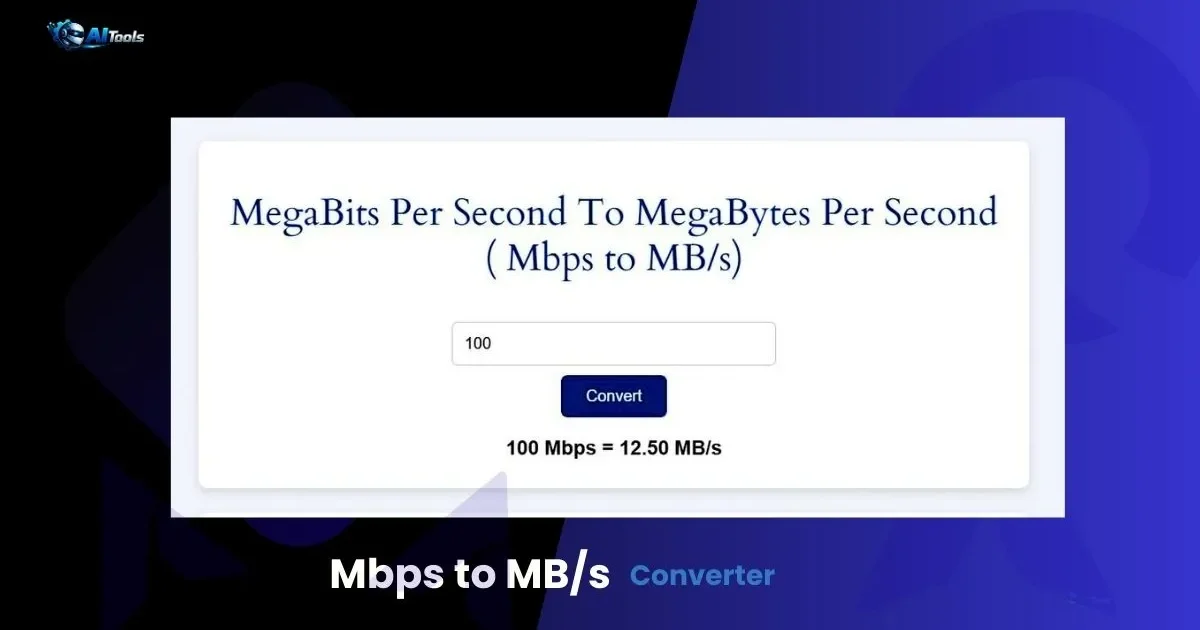
100 Mbps = 12.5 MB/s 200 Mbps = 25 MB/s 500 Mbps = 62.5 MB/s 1000 Mbps = 125 MB/s
Using the converter above eliminates the need for manual calculations and ensures accurate results instantly.
1 to 1000 Mbps to MB/s Conversion Table
| Mbps | MB/s |
|---|
Why This Conversion Matters
Understanding internet speed conversion is essential for several practical reasons. First, it allows users to estimate download times for large files. If you know your speed in MB/s and the file size, you can estimate how long the download will take.
Second, it helps you compare different internet service plans more effectively. Many broadband providers advertise speeds in Mbps, but real-world downloads are displayed in MB/s.
Third, this knowledge helps with troubleshooting slow connections. When you understand how these units relate, you can identify whether your connection is performing as expected.
Real-World Example
Imagine you have a fiber internet plan offering 300 Mbps. When downloading a file, your browser might display speeds close to 37.5 MB/s. This is normal because the download speed is expressed in megabytes rather than megabits.
If you download a 1 GB file at 37.5 MB/s, the download should complete in approximately 27 seconds.
Applications of Mbps to MB/s Conversion
- Estimating download times
- Comparing internet service providers
- Monitoring network performance
- Understanding cloud storage transfers
- Optimizing streaming quality
Content built around tools like this converter can attract search traffic from users searching for internet speed information and broadband comparisons.
Benefits of Using an Online Converter Tool
Manual calculations can lead to mistakes, especially when converting between bits and bytes. An online Mbps to MB/s converter offers a simple and reliable solution.
- Instant results
- Accurate calculations
- Mobile-friendly access
- No software installation required
- Easy to use for beginners
Frequently Asked Questions
1. Is Mbps the same as MB/s?
No. Mbps measures megabits per second while MB/s measures megabytes per second. One byte equals eight bits.
2. Why do internet providers advertise Mbps?
Networking equipment measures bandwidth in bits, so internet providers use Mbps to describe connection speed.
3. How many MB/s is 100 Mbps?
100 Mbps equals approximately 12.5 MB/s.
4. Why does my download speed look slower than advertised?
Most downloads display speed in MB/s rather than Mbps. Because of this unit difference, the number appears smaller.
5. What speed is good for 4K streaming?
Most streaming services recommend at least 25 Mbps for smooth 4K video playback.
Conclusion
The Mbps to MB/s tool simplifies the process of understanding internet speed measurements. By converting megabits per second into megabytes per second, users can better estimate download performance, compare internet plans, and interpret network speeds accurately.
As digital services continue to grow and data usage increases worldwide, tools like this converter help users make informed decisions about internet connectivity and network performance.
Mbps to MB/s Converter | MegaBits Per Second To MegaBytes Per Second